
From ancient myths to AI, we’ve always tried to make the inhuman more human. But what if the future of branding lies in going beyond human?
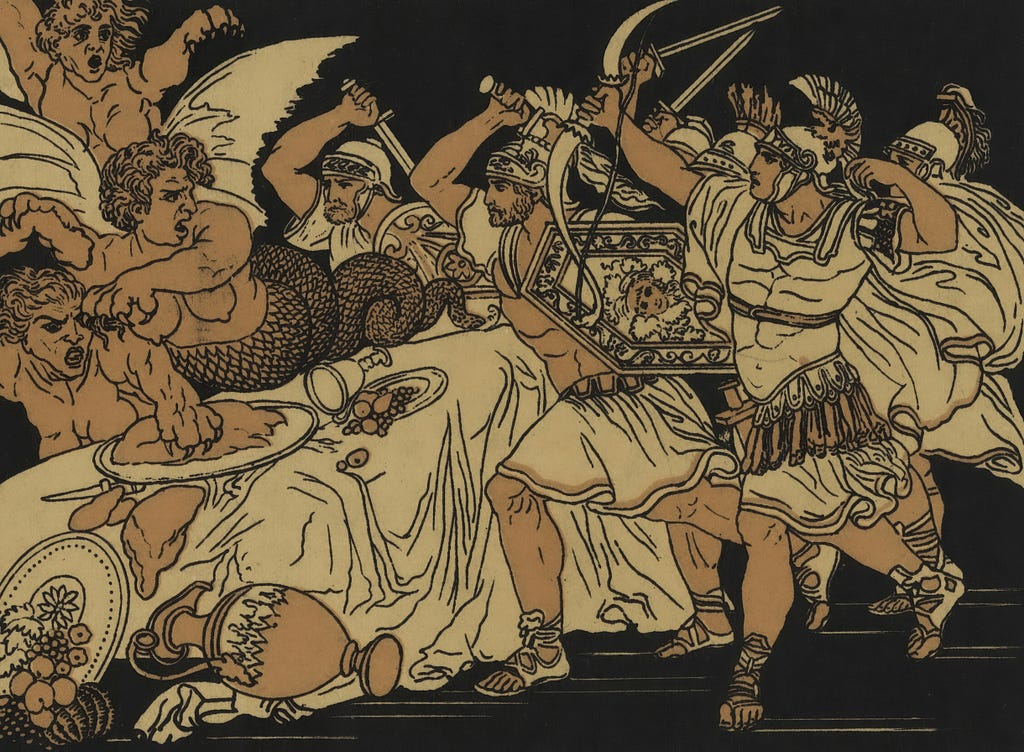 Photo by The New York Public Library on Unsplash
Long before brands, advertising, and marketing, there were myths.
The human mind is biologically wired to simplify complexity and bring structure to chaos. It’s how we preserve energy to manage the countless tasks that fill our days. We are also wired to seek connection — another evolutionary trait that ensures the survival of our species. And usually, we connect to what feels familiar and relatable. In that sense, despite all progress, we haven’t really changed at all.
Back in the Paleolithic Age, the first myths were born. Their purpose was to explain the mysterious, and there was plenty of mystery for early humankind: storms, changing seasons, the movement of the sky. Myths helped people pass down knowledge and build social bonds. Despite vast distances, similar stories appeared across cultures — floods, creation from chaos, fire falling from the sky. Myths, in a way, were our first framework for understanding existence.
In these stories, mystical or divine beings often possessed anthropomorphic traits — human forms, emotions, and behaviors. It was important to give the inhuman something human, so we could relate, communicate, and feel connection. By projecting familiar personality traits onto unfamiliar forces — animals, nature, or gods — we brought order to the unknown.
Over time, myths evolved into other forms of art — literature, painting, music, theater — shaping the foundation of our culture. The characters evolved too. Entire worlds were created for them, stories became richer, more layered. One thing, though, remained consistent: the less human the character, the scarier it felt. The more human traits it had, be it a god, a hero, even a talking animal, the more empathy we felt.
From the Greek gods, who embodied jealousy and love, to modern superheroes experiencing fear and doubt — the more human we made them, the closer they felt to us.
But if we zoom out, we’ll see that for most of history, these connections existed only in our imagination. We could feel for these characters, but never truly interact with them. That changed with the gaming era, when humans could finally engage with the inhuman, and in doing so, discover new ways of relating not only to the world, but to themselves.
Playing Gods and Aliens?
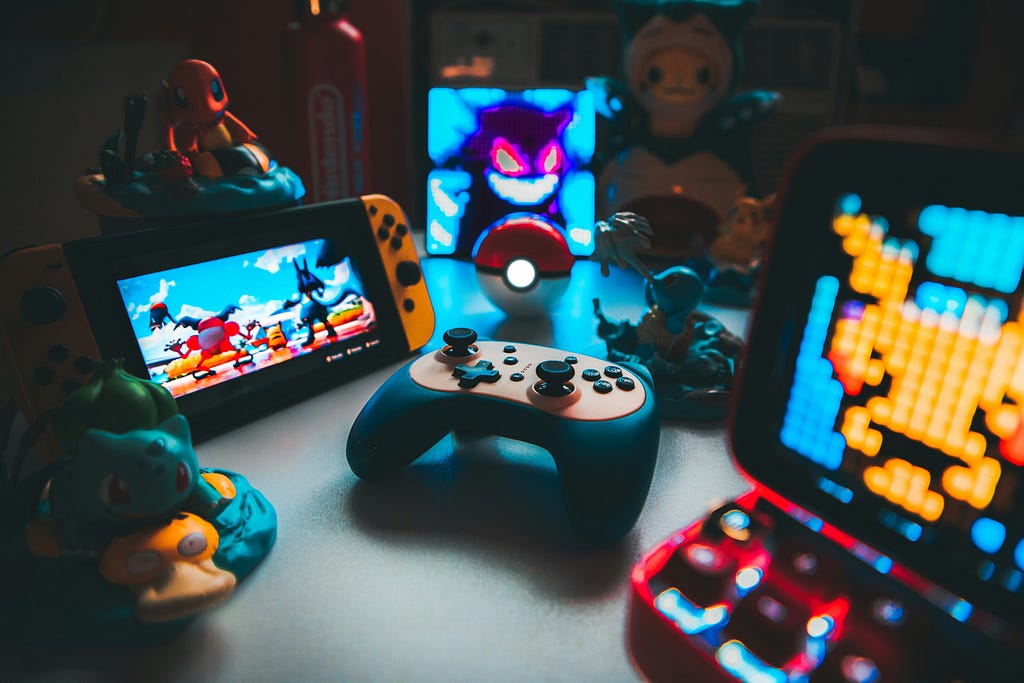
Video games introduced us to a new way of experiencing fictional worlds and characters by directly interacting with them, playing them and exploring our hidden desires, passions and new types of behavior.. As of 2024 more than eight in ten internet users aged 16 to 44 years played video games with the overall number of video gamers approaching 3 billion people. Apart from the fact that video games have significantly changed how people of different age groups spend their leisure time worldwide, for the younger generation they have become a social space to interact with their peers, explore their identites and better understand themselves while being in a safe virtual format.
This introduces the fundamental shift in the role of anthropomorphism. For millennia, connection was built on empathy and similarity — we needed the character to be human-like to feel a bond. With gaming, we obtained a new type of experience built on self-exploration and novelty. We no longer just watch or learn from a character; we inhabit their role, receive direct feedback, and, most importantly, discover new parts of ourselves through the digital persona.
While the impact of gaming is still quite disputable, many leading experts agree that gaming helps to expand our emotional range and encourage self-reflection. Sherry Turkle, an MIT professor and psychoanalytic researcher, argued in her landmark books “The Second Self” and “Life on the Screen” that computers, and especially video games, allow people to try on different personae and enact roles that are important to them psychologically. She emphasized that digital play can change how “we see ourselves and relate to others,” sometimes revealing hidden facets of our personalities that might not surface in offline life. Jane McGonigal, renowned game designer and researcher, popularized the concept of “gameful psychology.” Her work explores how roleplay and digital challenges unlock positive traits — such as optimism, persistence, and creativity, and thus help people to “become the best version of themselves”. So in a way what gaming does is unleashes human creativity, allowing us to experiment with different personalities, both human and inhuman, forming new neurological bonds, and creating new emotional archetypes, not based on empathy and similarity, but rather on immersion, experimentation, and co-creation.
The Dawn of Brands as Modern Myths

Unlike fictional characters, which are free to evolve, contradict themselves, or act beyond logic, brands are expected to stay consistent. Their identity must be stable, and their behavior predictable. Stability guarantees trust, quality, and a sense of control. But this stability is also a constraint. It’s the central tension that branding currently faces: a commercial entity that for the past century has operated as a modern myth is now struggling to stay believable in an age of constant change.
Branding as a discipline formed alongside the rise of mass media. By the 1960s, “brand management” has become a formalized discipline. What began as a mark of reliability and a stamp of quality quickly evolved, shifting its value from a product guarantee to a symbol of personal identity and social belonging.
By the 1980s, globalization and media saturation made image and emotional differentiation the primary battleground for marketing. The 1990s brought psychology into the mix: brand equity, brand love, and brand relationships became measurable characteristics and defined brand’s value. Marc Gobé in his influential book “Emotional Branding” (2001) argued that great brands don’t just sell benefits, they build emotional dialogue, forming human-like relationships grounded in trust, empathy, and shared values.
To achieve that, brands had to act like people. Jung’s archetypes, tone of voice, values, persona — these became the tools for humanizing corporate symbols designed to generate profit. Emotional connection ensured preference. Familiarity ensured habit. For a while, the system worked, even surviving the early internet era. But social media has disrupted the branding industry. It gave people a “direct line” to brands: to comment, question, demand transparency. What used to be a carefully crafted and curated story delivered to the audience through trusted media channels started collapsing under the pressure of millions of personal interpretations. The audience stopped listening, and started co-creating the story for brands.
Brands can follow this collaborative approach only so far. Beyond a certain point, the pursuit of co-creation risks eroding the very stability that defines them. Too much adaptation can dilute their identity, while too little risks losing audience attention. This is where we are now: in a world that expects brands to be hyper-personalized, interactive, and always on, yet still coherent, trustworthy, and distinct. I’ve already written about how acceleration and attention fatigue have made people more numb, harder to engage, and quicker to move on. So what can brands do now, when they’re expected to be hyper-personalized, co-created, and constantly available, yet somehow not lose themselves in the process?
New Times, New Branding Models
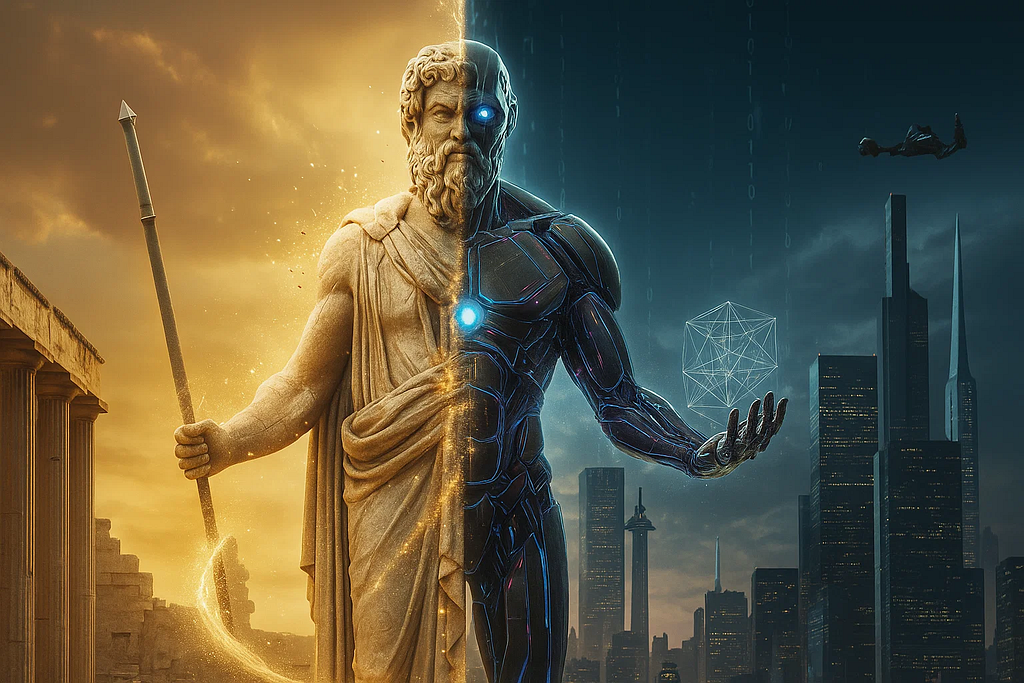
One way forward is to rethink how we build brands, and to admit that their stakeholders are changing. What if, like fictional characters, brands no longer need to resemble humans? What if their power lies not in imitation, but in going beyond what we recognize as “human”?
The presence of the inhuman has expanded beyond gaming and virtual worlds. We are becoming accustomed to interacting with the inhuman in the physical world as well. From smart vacuums to cooking assistants, we are already surrounded by non-human agents. And with the rise of AI, we’re beginning to delegate even simple decision-making: what to buy, where to go, what to read or watch. This is only the beginning.
Soon, AI systems will choose for us: the pasta brand in your cart, the T-shirt you reorder, the content you see next. In this world brands will have to be understood by machines, not just be relatable to people. They’ll need clear, structured signals that algorithms can read and rank — the new language of relevance.
Yet humans remain the ultimate users, and recipients of a brand’s emotional meaning. So the challenge becomes dual: a brand must satisfy machine logic while still offering something emotionally novel to the person behind it.
Perhaps the new value of brands is no longer in empathy or social belonging, but in expansion — helping people explore themselves, try on new identities, amplify hidden traits, and imagine what they might become.
We can already see some fragments of this new reality taking shape.
Nike has long moved beyond selling products, it cultivates transformation. By putting on a pair of running shoes, you’re not buying footwear; you’re entering an identity of an athlete. The brand doesn’t mirror who you are — it expands who you could be.
Patagonia, by contrast, represents an earlier emotional model — one built around shared human values and moral purpose. It united its audience through care and belonging, giving people something meaningful to believe in. But that model belongs to the humanistic era — a time when empathy, not evolution, was the goal.
Then there are brands like LEGO, Roblox, and Minecraft — brands that don’t sell products as much as they build universes. They let people cross between worlds, experiment with who they are, and take part in something creative and alive. It’s not about storytelling, it is about building worlds and giving experiences which go beyond human boundaries.
These examples hint at what’s coming next. Brands that will thrive are those capable of expanding human potential not by being more human, but by embracing the inhuman as a space for exploration, imagination, and growth.
I’ve already outlined two possible futures for brands in my earlier piece, and in the next, I’ll explore three more.
💬 Also published on Medium.
Reflections
-
Beyond Disruption: Branding as an Evolutionary Filter
In recent years, our world has been changing at such an incredible pace that words like “transformation” or “disruption”, which were so popular in business…
-
The End of Anthropomorphic Branding: When the Inhuman Becomes Relatable
From ancient myths to AI, we’ve always tried to make the inhuman more human. But what if the future of branding lies in going beyond human?Photo…
-
How Brands Will Survive the Non-Human Pace of Time
In a life lived at hyper-speed, what kind of relationships can brands still build with their audience?Photo by Pawel Czerwinski on UnsplashThe speed of life is…